I am into a complex task: for some time I’ve wanted to update the theme of this site and make it more versatile. Despite my obvious lack of time, the content is increasing steadily, so is the number of visitors, and I feel more and more often the need to structure better all these posts […]
UIPickerView Tutorial — part 2
Before we continue the second installment in the series of basic tutorials about UIPickerView usage and customization, a short digression. Most Cocoa/ Cocoa Touch tutorials assume that all connections to delegates, data sources and outlets are done visually in XCode. Our previous example was no exception. You can see from the project (gave the link below) […]
Bootable USB Drive with OS X Mavericks — Fastest Way
Apple released its latest OS X version, 10.9 or “Mavericks”. Quote Apple: “With more than 200 new features, OS X Mavericks brings Maps and iBooks to the Mac, introduces Finder Tabs and Tags, enhances multi-display support and includes an all-new version of Safari.” Cool, ain’t it ? But this I like most: “The latest release […]
Split NSArray based on characters
Arrays are omnipresent. As I needed a snippet to make a string into an array of values, I thought would be helpful to share this for beginners. For example, take a string variable like, Create an array variable “array1” as:- I used the for loop to know the array1 values, which is displayed in Console […]
iOS 7 UIPickerView Simple Application
Recently I was asked by a friend to provide some support with UIPickerView in iOS 7. He was a bit puzzled by what it seemed to be the impossibility to pad the content of each picker view row to a certain distance from the left side of the UIPickerView. Basically, let’s consider the following example. […]
Usage of void in C
Going into some USB programming for a project I am into (on my Mac), I ran into this and I thought would be nice and useful to elaborate a bit. This is about void* pointers and callbacks in C. USB device discovery and probing under IOKit makes heavy use of callbacks, I wanted to write […]
Auto-increment versioning in XCode 5
Ok, this will be quick. There is no built-in feature or that supports automatic code versioning in XCode. I am talking about auto incrementing versions or build numbers in XCode plist, aka “CFBundleVersion” info.plist entry. Here’s a quick one for XCode 5. Make sure your target has an *Info.plist file. Add an entry there, as […]
Using LLDB Commands in XCode 4
The rationale for Apple’s move to LLVM and slowly parting with the aging GCC has a long history and is out of the scope of this brief tutorial on LLVM commands. The primary reason for switching from GCC to Clang — probably — is the incompatibility of GCC’s GPL v3 license with the goals of […]
NSString initWithBytes:length:encoding:
NSString initWithBytes:length:encoding instance method. A quick example. Uses a NSData object from the content of my blog’s first page and displays the string in an NSTextView outlet: The result: A variant, with a char array: The result:
Chasing Zombies in XCode 4
Ok, this will be a short one. Probably I will create a category like “code snippets and hints” to include all these small articles. This is about zombies in your coding projects and how to chase them. Enabling a project to trace zombies is different in XCode 4 than in previous versions. There is a […]
Core Animation documentation revisited
January brings updated documentation from Apple and I want to share the link to the completely rewritten Core Animation Programming Guide. The release notes include reference to a “Major revamp, reorganization, and expansion to cover modern Core Animation behavior in iOS and OS X”. Just in time, as some of my projects rely on this. […]
How to create hatching in Illustrator
Couple of days ago I need to create a hatched drawing for one of my project plan. Discovered a neat way to create hatching in Illustrator and I thought it might be useful to share. Create a new document, any size. Press “M” to access the Rectangle Tool: Click on the canvas and make a […]
NSOutlineView — Inside Out 2
Some good months ago I started a series on NSOutlineView that I didn’t imagine it will stir such an interest. To my astonishment, googling NSOutlineView ranks my post fourth in the search, immediately after Apple’s official documentation and some other two links: This intriguing situation (nevertheless inspiring for me) might have to do with the […]
Anti aliasing Illustrator features for web artwork
While creating some artwork for an article, I ran into an interesting anti aliasing Illustrator feature. That might be handy for you to know. Exporting images for web (“Save for web”) uses Cmd-Opt-Shift-S shortcut (Ctrl-Alt-Shift-S on Windows). This brings the following screen: You have three anti aliasing Illustrator options for the look of your exported artwork: […]
AVRISP mkII
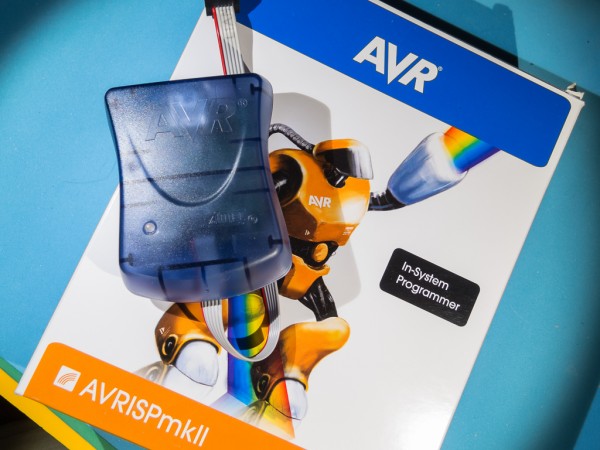
Until recently I have extensively used my MacBook, AVRDude and USBTiny for my μController projects: Now I got myself a proper tool, the AVRISP markII, mostly because I wanted to use AVRStudio 6.0 features: Key features: Programs both flash and EEPROM Supports fuses and lock bit programming Upgradeable for future device support Supports target voltages from […]
XCode 4.3.3 – how to edit build settings
Working on my Logic Analyzer project, I wanted to setup a combined target structure in XCode, to have the complete E2E scenario built, from μC firmware to the cocoa libraries and application code. This means adding custom targets for μC build and upload. Well, as a short reminder, for now I am using a simple Arduino […]
Logic Analyzer!
…and not only software (maybe). OK, to keep things short, I got tired by limitations of my Saleae logic analyzer, especially on the software side so I decided to build one. This is my new project: a DIY logic analyzer that I will hopefully use to better extent in my other projects. First results promising. […]
Analog Devices – Currents Monthly, May 2012 issue
I love organizations that know how to share their know-how. Analog Devices is one of them.
Understanding Power MOSFET data sheet parameters
Fabulous piece of literature from NXP (here’s the link to a cool pdf). Nothing beats a well written material. So it seems that I have some very interesting thing to do this evening: printing this and have a good read. This comes on perfect timing for my MOSFET dummy load project ! Quoting from NXP’s material: […]
NSOutlineView — Inside Out
This is the first part of a series I intend to maintain on NSOutlineView. Some NSOutlineView basics and a very simple example.
Going Low Level
Some time ago I have on boarded on a very ambitious project that I though could be overkill, nevertheless I have persevered in my ambition to prove it is doable. However, as I needed to dig a bit into Assembly language, I have gathered some resources I thought it might be useful to share here.
Dummy Load Prototype – 2
Next steps for my dummy load prototype based on IRF830 N-Channel MOSFET, and a LM328 plus a multi turn pot.
OS X Lion, Safari, Activity Window and downloads
Previous versions of OSX had a very handy shortcut for downloading an item from activity window. How to do it in Lion ?
Texas Instruments SmartRF Studio Update 1.7.1
SmartRF™ Studio is a Windows application that can be used to evaluate and configure Low Power RF-ICs from Texas Instruments.
Multisim Circuit Explorer
Today’s goodie is an iPad app. A cool iPad app, designed for iPad not “iPad compatible”. It is from National Instruments: Multisim Circuit Explorer.
Weller WD 1000M Review
There are good tools and poor tools. Weller WD 1000 M is a state-of-art quality instrument that looks good, feels good, has a plethora of gimmicks and is a pleasure to work with. Let’s find out some more about my new soldering station.
MAX17058, MAX17059: 1-Cell/2-Cell Li+ ModelGauge ICs
The MAX17058/MAX17059 ICs are tiny fuel gauges for lithium-ion (Li+) batteries in handheld and portable equipment. The MAX17058 operates with a single Li+ cell and the MAX17059 with two Li+ cells in series…
Step by Step Measurement Handbook for Power MOSFET
A customized Application Test Library is created for testing the specifications introduced in this measurement handbook. They can be downloaded from the Agilent web site.
RFM12B Command Calculator for Mac
Inspired by this project for RFMB12 and needing a similar one for my Mac, I started to build one myself: Next – a version for iPad. Stay tuned. 😉
Agilent InfiniiVision 2000 X-Series Oscilloscopes Programmer’s Guide
Keysight’sAgilent’s InfiniiVision 2000 X-Series Oscilloscopes Programmer’s Guide is highly recommended for anyone interested in remotely controlling KeysightAgilent InfiniiVision 2000 X-Series Oscilloscopes. Via back USB slot. For example: Unfortunately, the [remote] control is limited only to Win PCs. AFAIK. Have to write a review soon about the cool KeysightAgilent Connection Expert, the client app installed together with the KeysightAgilent […]