I was pretty busy since August 2024 with a lot of other tasks, mostly job-related and did not have too much time for DIY and tinkering. And this included my SA818 project.I cannot believe how fast time flies and seems the speed is increasing as I am getting older. However, december was a nice month, a little more relaxed so I found some time to burn on my hobbies. And I did a redesign of the august 2024 version of my SA818– and CM108-based radio node.
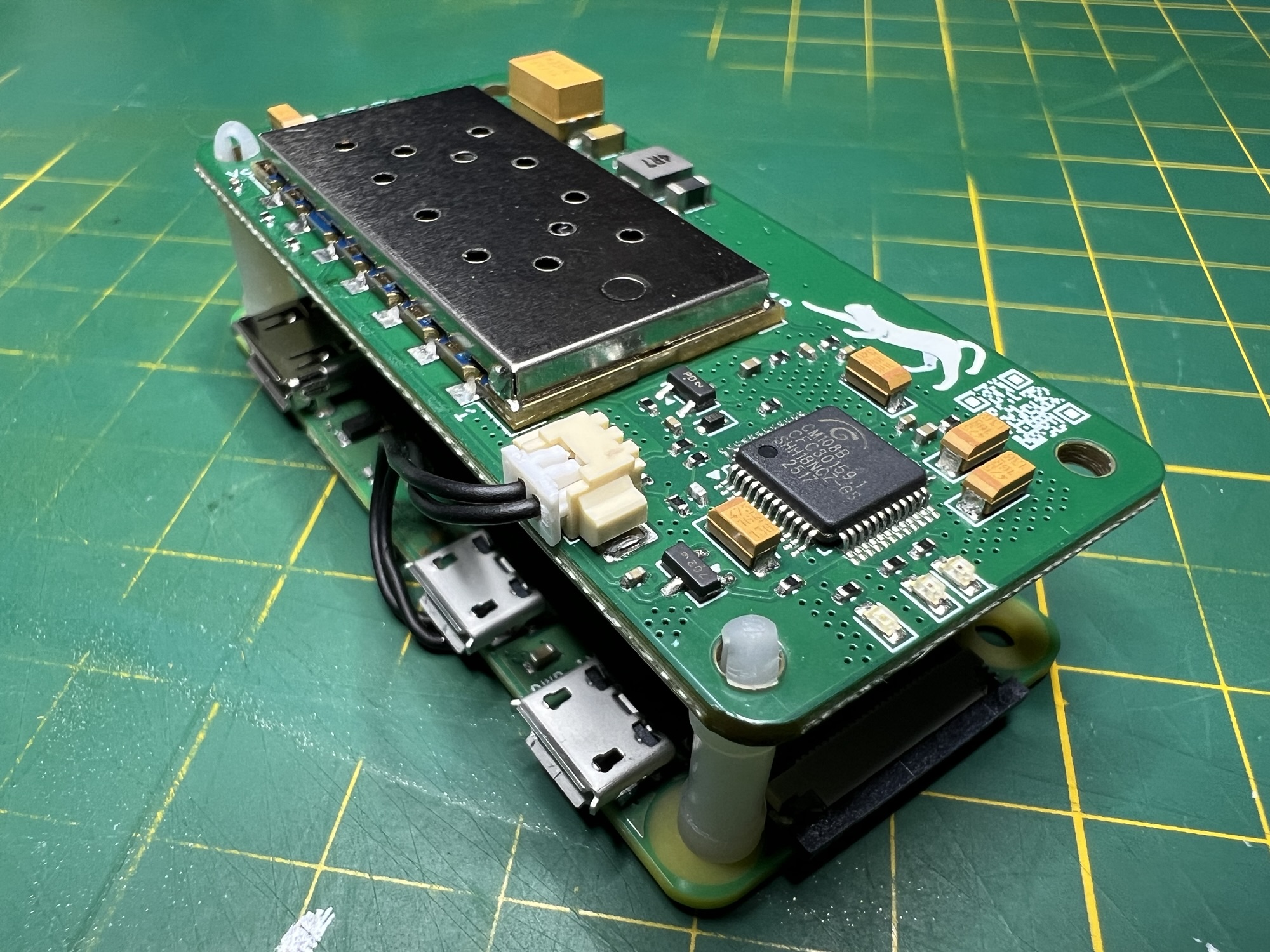
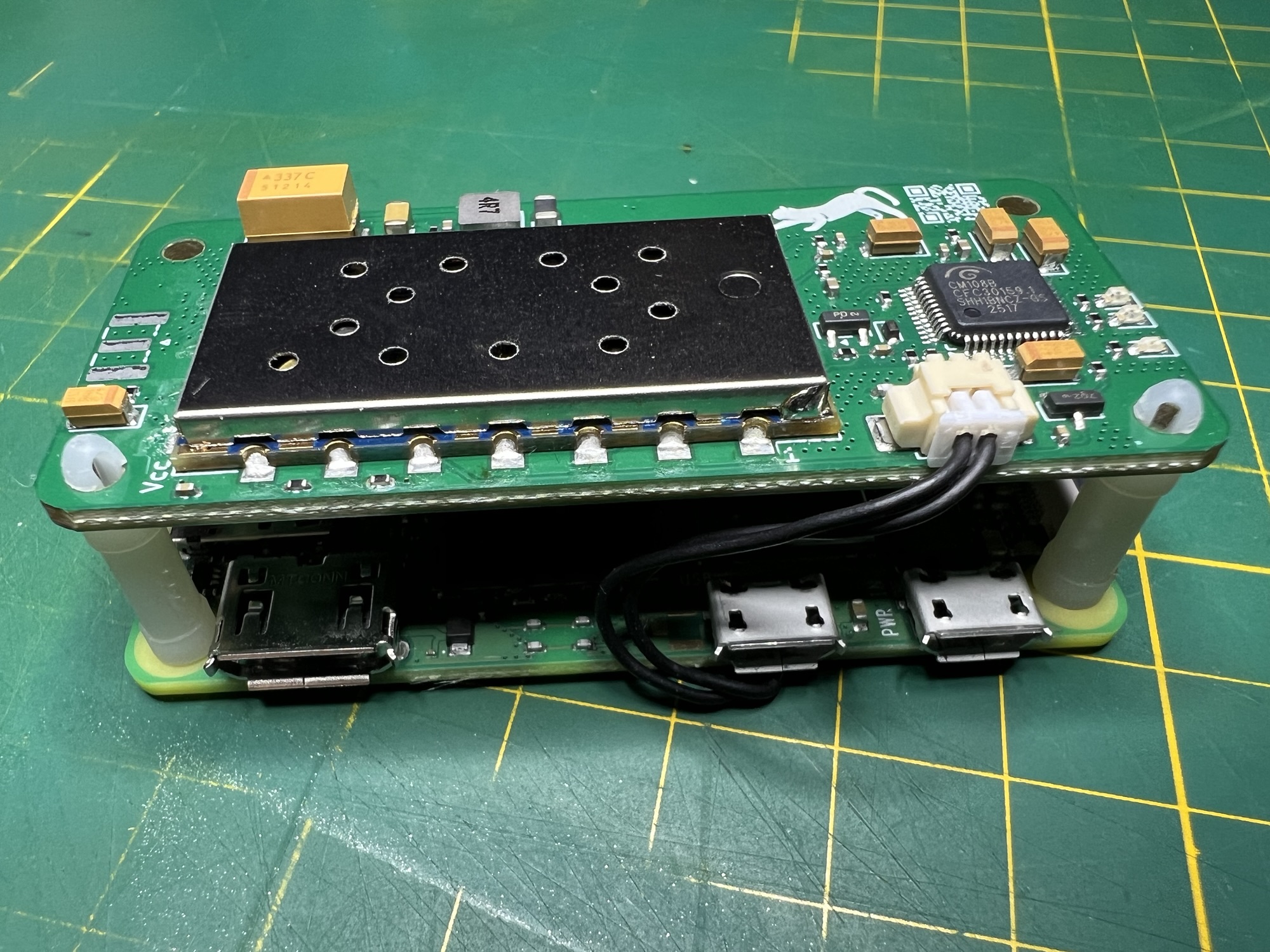
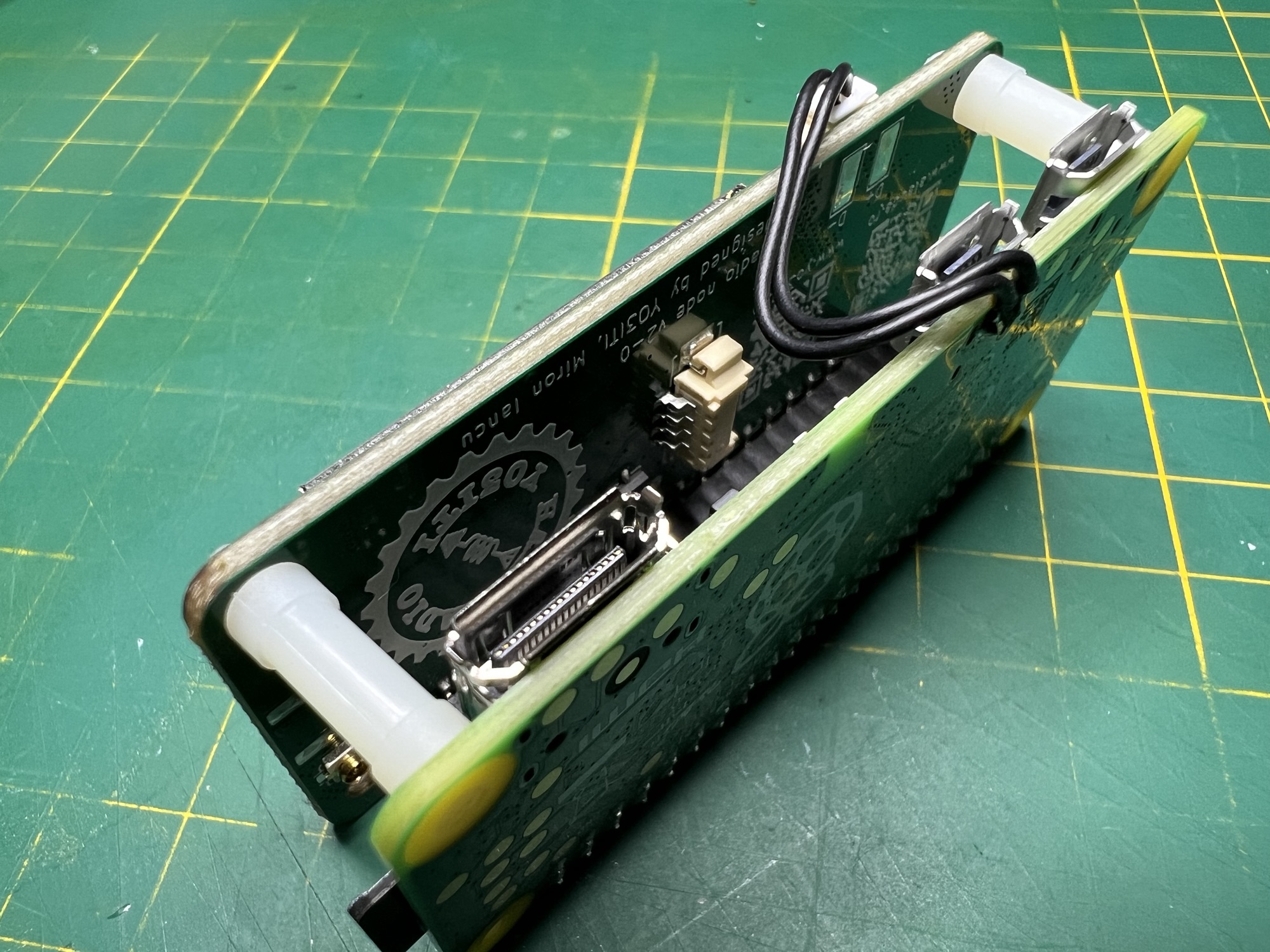
In January 2026 I ordered the improved version from jlcpcb.com with many new parts, including a SMD 40-pin header and SA818 pre-assembled by them. This is version 2.0 and I dare to say it simply runs flawlessly.
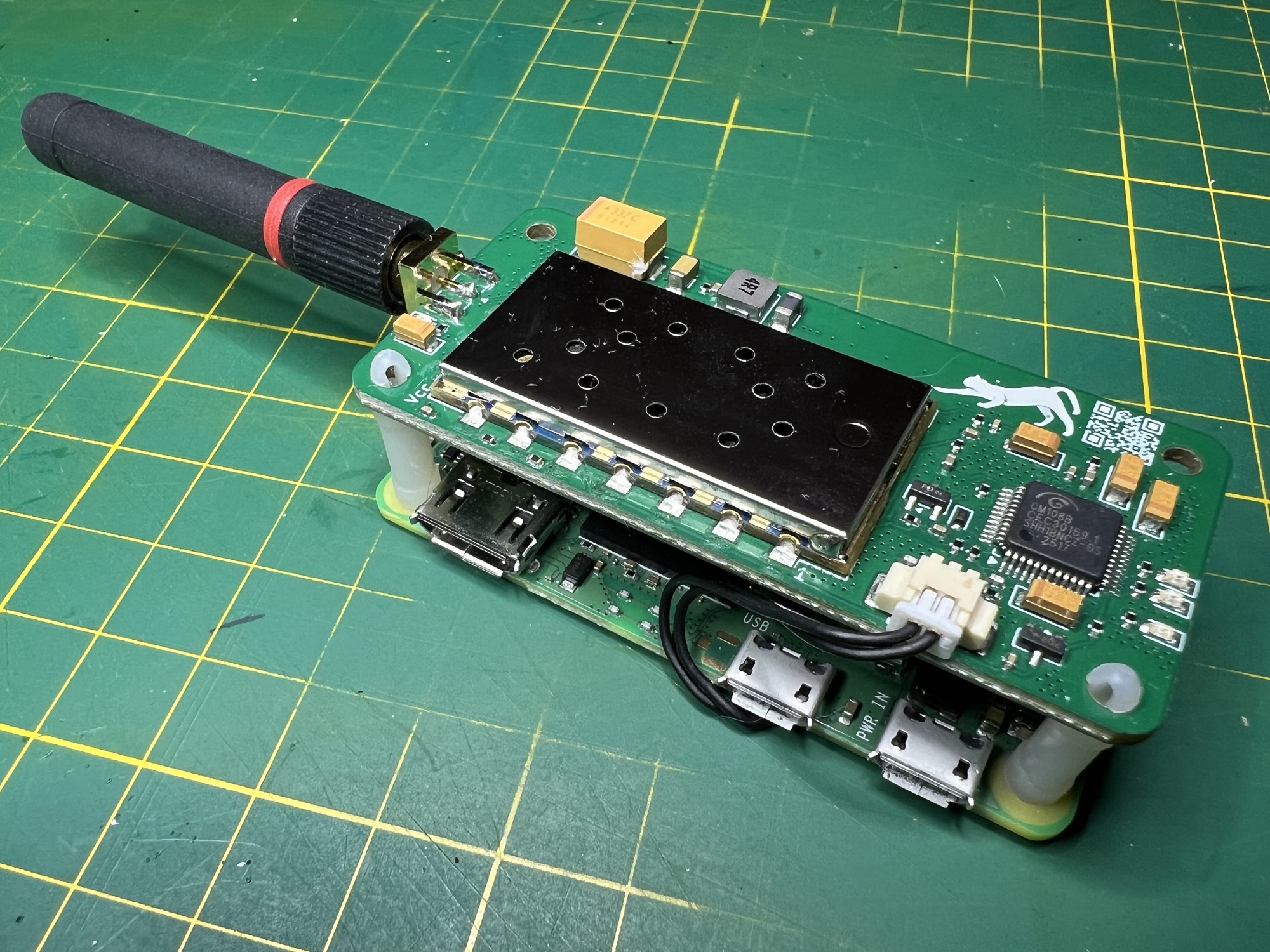
The node, assembled on a Raspberry Pi Zero W2 board. Antenna is a Linx 430 MHz, high efficiency professional antenna I got from Mouser.
All boards came from jlcpcb in this format:
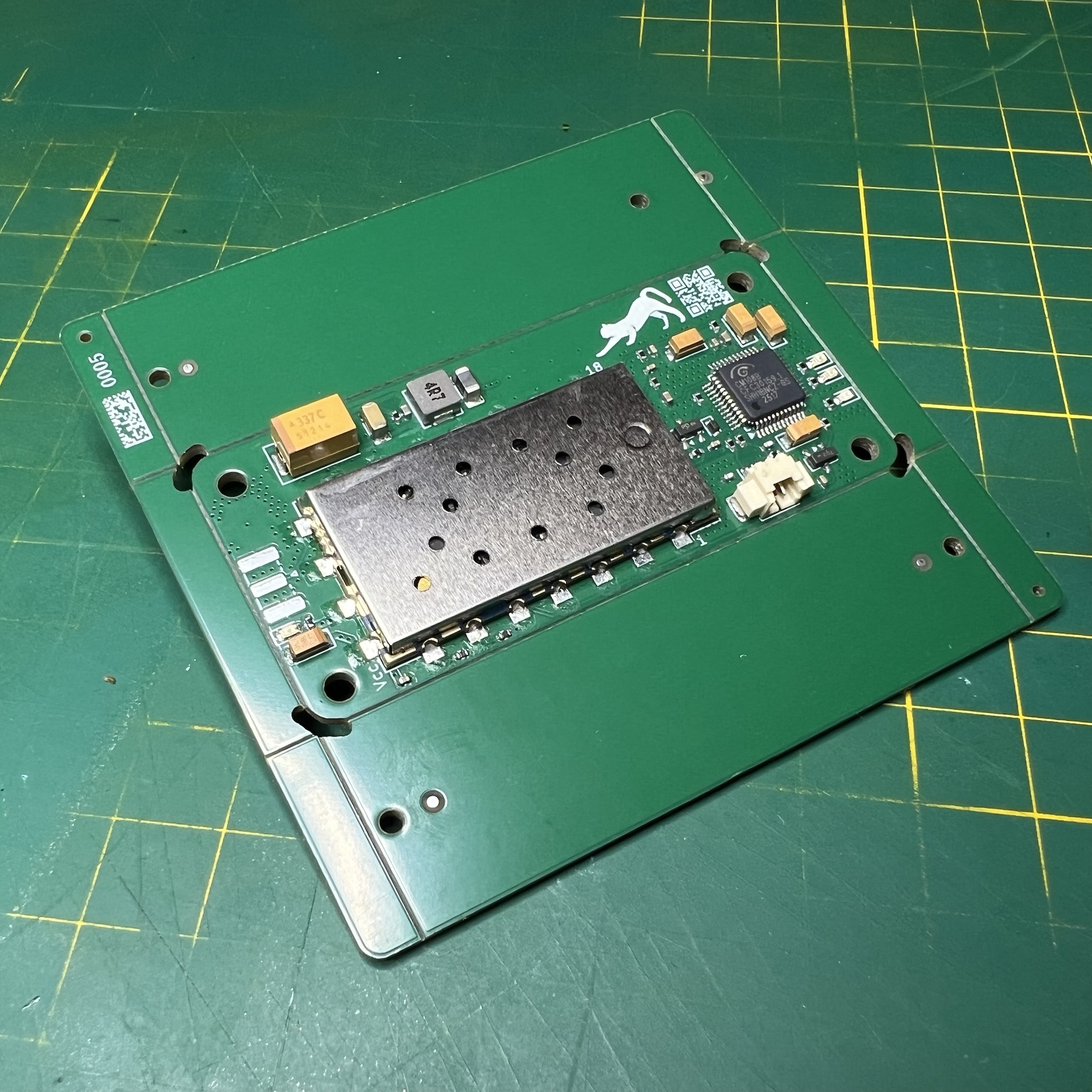
Probably the stencil for SA818 could not be accomodated on the smaller, final shaped, board so they chose this approach.
This version supports active cooling by attaching a 4-wire fan (with tacho and PWM wires). I designed the board with a MOLEX PicoBlade 4-pin 1.25mm pitch smd connector on the bottom of the board for convenience and fast connection of a fan. Also, it has an UFL connector for those that want to have a remote-ish antenna.
I had gathered some lessons learned from my last version and also tried a new approach to noise management that seems to work darn well: additional and improved power supply filtering and some pcb design tricks that simply make a huge difference. I am extremely pleased that I can use cheap switchmode 5V power supplies and there is not even a shadow of any hum or click or hiss. Modulation is good, not perfect. But this is a limitation of the SA818 and it’s crappy emphasis/de-emphasis filters. Anyway, this is the last CM108-based. I will completely drop this project and I will focus only on the I2S version. I think the CM108 version simply cannot be improved too much anymore but most importantly I want to focus on I2S, driver and dtoverlay support. I have in mind some other RPI Zero based projects that will benefit from high quality audio on I2S.
More to come. Some more pictures below:
WARNING !!! Please do not write me asking for KiCad files and samples. I do not sell these and definitely I will not share my work. I do not believe in the so called Open Hardware concept. This is just another way of stealing other people work and capitalizing on their efforts. People that asl for free lunch should at least have the decency to credit the authors – which they never do. You can at least make a small effort to learn new things – learning is good for your brains – and do these things by yourselves especially given the fact that these are not complicated projects. If you don’t like it, you can shove it. Thank you for your understanding.